Living Literature on the Land
Stories rooted in nature, brought to life on the land
This summer we are offering a unique learning experience that brings literature to life through nature, creativity, and hands-on homestead skills.
Living Literature on the Land is a summer literature and experiential learning program designed for children ages around 8–11. Each month we will read a beautiful nature-centered book and then step into the world of that story together through gardening, herbalism, wilderness skills, art, and homestead projects.
Rather than simply reading the book, students will experience the story through real-life activities on the land.
Through weekly gatherings, thoughtful discussion, creative expression, and hands-on projects, students will strengthen their reading comprehension, develop critical thinking skills, and deepen their connection to nature.
How the Program Works
Students will read one book each month throughout the summer.
We will gather every Monday from 9:00 AM – 2:00 PM on the farm for literature discussion, creative projects, and nature-based learning inspired by the story.
During the week, students will read a small portion of the book at home so everyone arrives prepared for our Monday discussion. Reading expectations are manageable: approximately 10–15 pages per day, depending on the book.
Mondays will include time for:
• guided literature discussion and story analysis
• quiet reading time in nature
• hands-on homestead and nature skills
• herbalism and garden activities
• art and creative projects inspired by the story
• outdoor exploration and nature games
Students are encouraged to bring a picnic-style lunch, and we will enjoy time together sharing food outdoors. Herbal tea from the garden and occasional seasonal farm snacks will be provided as part of the experience.
To maintain a thoughtful and engaging learning environment, enrollment is limited to 10–12 students.
The Living Literature Field Journal
At the beginning of the program, each student will create their own handmade Living Literature Field Journal.
This journal will accompany them throughout the summer and become a place to capture their experience of the stories and the land.
Students may use their journals to record:
• reflections from the stories
• sketches and botanical drawings
• pressed flowers and leaves
• nature observations
• favorite quotes from the books
• homestead skills they learned
• recipes or herbal notes
• maps and discoveries from the land
By the end of the summer, this journal becomes a personal record of their time on the farm and the stories they lived.
Students may choose to share pages from their journal or keep some reflections private, just as one might with a diary.
Reading Support
Children develop reading skills at different paces, and this program is designed to welcome a range of readers.
Some students may read the chapters independently, while others may choose to read with a parent or listen to the audiobook while following along in the text. Both approaches work beautifully and allow each child to engage with the story in a way that supports their learning style.
Our goal is to nurture a love of reading, thoughtful discussion, and connection to the story, not to create pressure around reading level.
Summer Reading Schedule
June
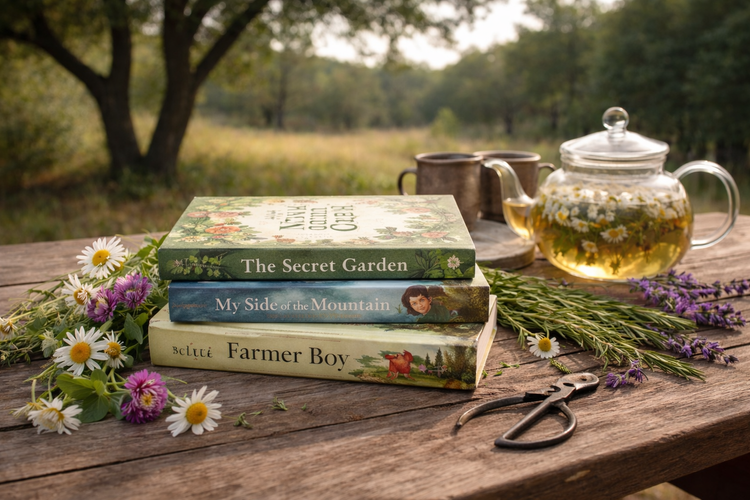
The Secret Garden by Frances Hodgson Burnett
This beloved classic explores themes of healing, friendship, curiosity, and the transformative power of nature.
As Mary Lennox discovers the hidden garden and begins restoring it, she learns that tending the land also nurtures the heart and spirit. Throughout the month, students will explore the magic of gardens, seasonal growth, and the quiet beauty of nature observation.
Together we will step into the spirit of the story by working with the land, learning about plants, and creating beautiful nature-inspired projects.
Activities may include:
Planting and tending a garden bed
Students will prepare soil, plant herbs and flowers, and learn how gardens come to life through care and patience.
Creating botanical journals
Children will sketch plants, press flowers, record garden observations, and reflect on the story in their handmade field journals.
Flower pressing & botanical art
We will collect flowers and leaves from the land and learn traditional techniques for pressing and preserving them.
Pollinator exploration
Students will learn about bees, butterflies, and the vital role pollinators play in a thriving garden ecosystem.
Herbal discovery walks
We will explore the land to identify herbs and plants growing around us and learn simple ways people have used them for nourishment and wellness.
Herbal teas and simple herbal preparations
Students may help prepare herbal teas or simple herbal blends while learning about the gentle power of plants.
Nature-inspired art and garden crafts
Creative projects inspired by the garden and the beauty of the natural world.
The Secret Garden project
Students will help create a small hidden garden space on the land where we can gather, read, and reflect—just like the characters in the story.
Quiet reading and reflection in nature
Children will spend time reading outdoors beneath the trees and recording their thoughts in their journals.
Monthly Story Celebration
At the end of the month, families will be invited to join us for a Garden Tea Gathering.
Students may share their botanical journals, pressed flowers, artwork, and reflections from the story. We will enjoy herbal tea from the garden and celebrate the beauty of the land together.
July
My Side of the Mountain by Jean Craighead George
In this adventurous and beloved story, a boy named Sam Gribley leaves the noise of New York City and journeys into the Catskill Mountains to discover whether he can truly live with the land.
Through patience, observation, and ingenuity, Sam learns how to build shelter, find food, make tools, and form deep relationships with the wild creatures around him.
Throughout the month, students will explore what it means to slow down, observe nature carefully, and develop the skills needed to live closely with the land.
Inspired by Sam’s experiences, we will step into the spirit of wilderness exploration and discovery.
Activities may include:
Wilderness shelter building
Students will learn how simple shelters can be constructed using natural materials, experimenting with lean-tos and other basic woodland structures.
Bird study and feather identification
Inspired by Sam’s falcon Frightful, we will study birds, examine feathers, and learn how birds survive and thrive in different environments.
Wild plant exploration
Students will take guided walks to observe edible plants, useful herbs, and the many ways people have traditionally relied on plants for nourishment and survival.
Primitive skills demonstrations
Children will learn about simple survival techniques such as fire building, tool making, and other traditional wilderness skills.
Nature observation and “sit spot” practice
Students will spend quiet time in nature learning to observe wildlife, bird calls, insects, and the subtle rhythms of the landscape.
Mapping the land
Inspired by Sam’s deep knowledge of his surroundings, students will create simple maps of the farm and mark special places they discover.
Field journaling and nature sketching
Students will document their observations through drawings, reflections, and notes in their Living Literature Field Journals.
Tool and craft exploration
Children may experiment with carving simple wooden tools, creating cordage, or exploring other traditional hand skills.
Monthly Story Celebration
At the end of the month, families will be invited to join us for a Wilderness Gathering.
Students may share pages from their field journals, demonstrate shelters they have built, or share observations from their time exploring the land.
Together we will celebrate the spirit of curiosity, courage, and connection to the natural world that Sam discovers in the wildernes
August
Farmer Boy by Laura Ingalls Wilder
This beloved classic tells the story of Almanzo Wilder growing up on a nineteenth-century farm in rural New York. Through the changing seasons, Almanzo learns the rhythms of farm life, caring for animals, working the land, and helping provide food for his family.
The story celebrates the values of hard work, resourcefulness, and the deep satisfaction that comes from living closely with the land.
Throughout the month, students will explore traditional homestead skills and discover how food and farm life were once woven into everyday family life.
Inspired by the scenes in the book, we will step into the world of the homestead through hands-on activities that connect us to the land and to the food we eat.
Activities may include:
Grinding grain and baking bread from scratch
Students will experience the process of turning grain into flour and baking simple rustic breads.
Butter churning and traditional dairy skills
Inspired by the farm kitchen scenes in the story, students will learn how butter is made and explore traditional dairy practices.
Simple homestead cooking
Children may help prepare seasonal foods while learning how farm families once cooked and preserved their harvest.
Farm animal care and observation
Students will learn about the roles animals play on a working farm and how farmers care for livestock.
Harvest and garden exploration
We will observe how summer gardens mature and explore the connection between soil, plants, and the food on our tables.
Traditional farm skills and handwork
Students may experiment with simple homestead crafts and tools that reflect the resourcefulness of farm life.
Field journaling and homestead reflections
Students will document what they learn through sketches, notes, and reflections in their Living Literature Field Journals.
Celebrating the abundance of the land
Throughout the month we will reflect on the many gifts the land provides and how families once worked together to sustain themselves through the seasons.
Monthly Story Celebration
At the end of the month, families will be invited to join us for a Homestead Harvest Gathering.
Students may share pages from their journals, demonstrate homestead skills they learned, and celebrate the stories and experiences of the summer.
We may gather together for a small farm-style feast, enjoying simple foods inspired by the story and celebrating the beauty of living close to the land.
Monthly Story Celebrations
At the final Friday gathering of each month, parents will be invited to arrive 30 minutes early for a special Story Celebration inspired by the book we have been exploring.
Students may share pages from their journals, artwork, or projects from the month and reflect on what they learned from the story.
Each gathering will reflect the spirit of the book.
June may include a garden tea gathering with herbal tea and time exploring the garden.
July may invite families to see the wilderness skills and shelters students have practiced.
August will close the summer with a homestead-style celebration honoring the skills and experiences students gained on the land.
These gatherings allow families to share in the experience and celebrate the stories we have lived together.
A Living Classroom
Our farm provides the perfect setting for this program.
Children will spend their Fridays reading beneath the trees, working in the garden, creating art inspired by nature, and bringing the stories to life through meaningful experiences.
By the end of the summer, students will not only have read three beautiful books they will have lived them.
Tuition
Monthly enrollment: $325
Includes four Friday gatherings each month from 9:00 AM – 2:00 PM.
Students may enroll month-to-month or reserve their space for the full summer.
Full Summer Enrollment (June–August): $900
Books are not included in tuition and should be purchased or borrowed prior to the start of each month.
Enrollment is limited to 10–12 students to preserve the intimate and engaging nature of the program.
We look forward to spending the summer reading beautiful stories, working with our hands, and connecting with the land together.